Tuesday, September 29, 2015

Humpback Rocks Visitor Center


Just a short hop on the Blue Ridge Parkway is the Humpback Rocks Visitor Center, Farm Museum and the trail head to a one mile long hike to the top of Humpback Rocks.  The Parkway was built during the Great Depression as a works project to employ young men from urban areas.  Pay was sent home to help the families and they learned skills such as road building, stone work and construction.  Their work still stands in the bridges, overlooks and building along the Parkway.


The Visitor Center has music on some weekends during the summer.  It is a chance for tourist to hear the local Blue Grass Music that has strong roots in the Blue Ridge Mountains.  A number of locals come out as well to reminisce about the times gone by when they had grand parents who lived on a small farm like the one represented at the Farm Museum. 


Playing under the shade of an old Walnut tree, local musician play the Banjo, fiddle, mandolin and standup bass.  The local area has a number of people who still make the tradition instruments and sell them all over the world.  


The log cabin home is typical of the log homes built in the area.  Chestnut and oak logs were squared up to make the walls.  Often in later years, the same houses might get white painted clapboard siding.  Farming on the mountain tops was not easy, as there is very little soil and lots of rocks.  The farms would till a small area and have livestock on the rest.   Much of their income came from the woods, either from timber cutting and harvesting chestnuts from the American Chestnut tree.  Wiped out by a blithe in the 1930s, the chestnut tree was dominant tree in the area.  It was a light wood that easy to cut and mill, but had the rot resistance of an oak or cedar tree.  It also produced a flood of chestnuts in the fall that were a key staple to survive the long winters in the mountains.  They were also shipped into places like New York City, where “chestnuts roasting on an open fire” were a traditional holiday treat.  While efforts are still being made to save the species, modern chestnuts are from the Chinese Chestnut and have a different flavor from the traditional American Chestnut. 
 
Life in the main room was kitchen, dining room and sleeping area.  The hearth was the focus for cooking as well as heat.  Chores such as getting water from the well, keeping the fire burning and raising your own food were just the normal daily routine for people back then.  A trip into town was a big occasion for people who lived out here.  Even so, at the same time period, one could mail order everything from dresses to houses from a Sears Catalog and Steel structures like the Eiffel Tower were being built.


The stone chimney is often the only remnants of the cabin left in the woods to remind us that we are walking on a long forgotten farm.  At the Fenton Inn we have a Chimney and the stone outline on a similar cabin and farm that nature has reclaimed as its own again.  


The front porch of the cabin was a room for rainy summer days.  Quilting was a way to make art out of scraps of cloth sewn into patterns. 


A game of checkers on the porch. 


The barn was used to store hay and protect the family cow in winter.  


Pigs roamed the woods all summer and were held in small pens to fatten them up on chestnuts in the fall.


In an age when everything comes from a plastic container, seeing where milk comes from is a shock to many children. 


Firewood was a daily task year round for heat and cooking.  The trees were cut to make fields.  The wood was used for lumber and firewood and even the ashes were used to make soap.   It may have been a lot of work, but then how hard do we work today to get things we don’t even need?


Friday, August 28, 2015

Hiking to the Shamokin falls near Fenton Inn .

Another short hike for an interesting spot on Wintergreen is to hike to Shamokin Falls.  It is out near the very end of Laurel Spring, and can be driven to from the Fenton Inn in about 10 Minutes.  The Trail head is marked by a sign on the side of the road with a few spots to pull over for the hike.

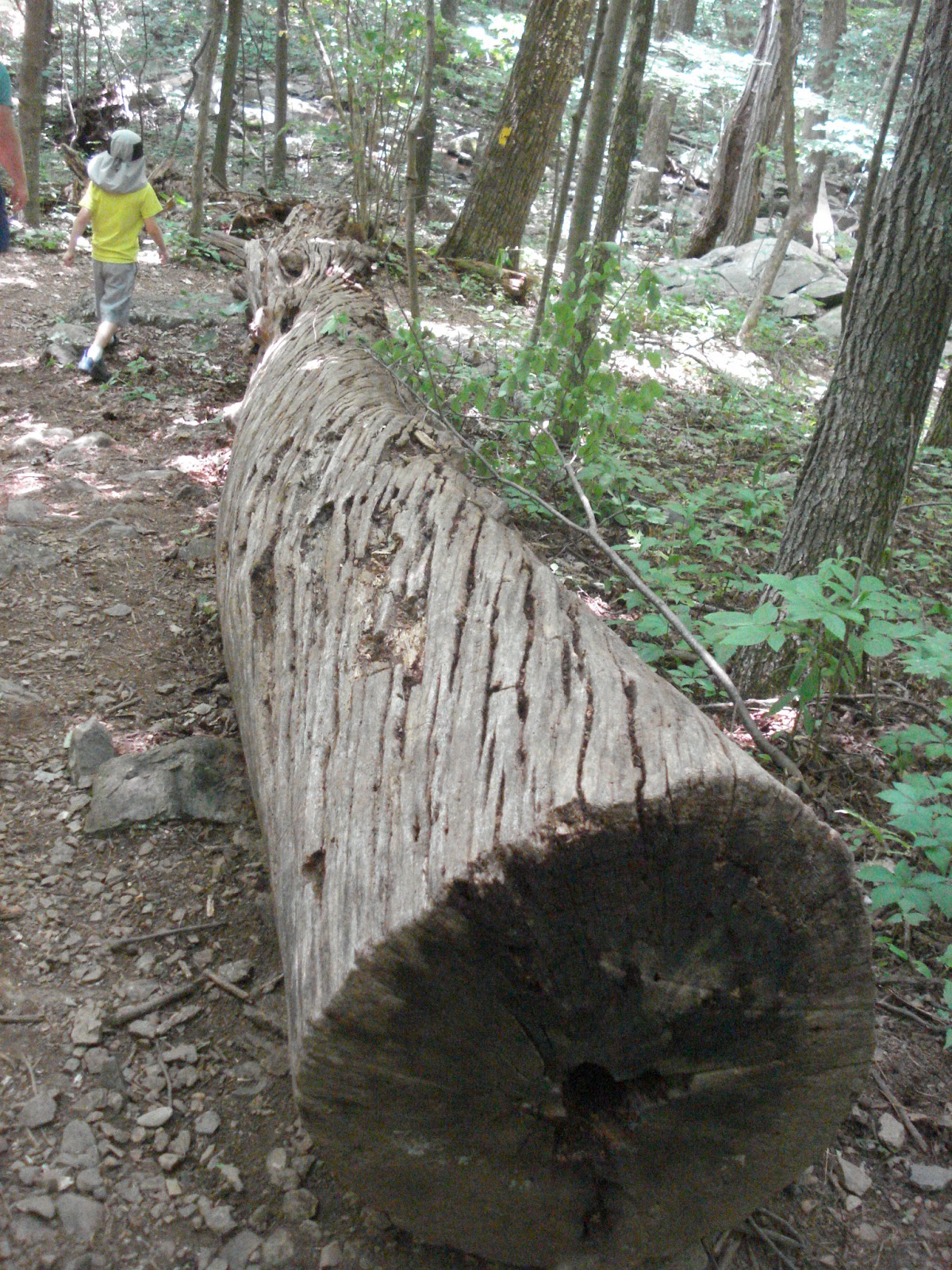
A tree fell in the forest, but I am pretty sure it made a sound even if no one was nearby.  As a big fan of trees, I see a certain beauty and dignity in the weathering of the massive trunk.  Even after falling, the wood holds up for decades against the elements as if wanting to be remembered.  


A little bridge over a stream.  


After a few more minutes we reach the waterfall.  The water spills down into a small pool, but not quite enough for swimming.  After a good rain in spring the waterfall can grow considerably.
This is a very short and pleasant hike in a cool woods even in a hottest days of the year.


Friday, August 21, 2015

The Plunge hike at Wintergreen Resort.


Imagine a long hike on the Blue Ridge Mountains to get to a rocky peak over looking a long valley, and then replace the long hike with a 5 minute drive and a short climb, and that is what the plunge is about.  No need for a back pack or a compass here, but you will need some good shoes as the trail involves a lot of steep climbing over rock faces and cliff.  The trail head is at Black Rock Park, which is about half way around Black Rock Circle, which is the first right turn after the Black Rock Market. 


 In a few minutes and after descending a few flights of stairs and feeling a bit like a mountain goat, there is a great overlook of the Beech Grove area including the Devils Backbone Brewery and Bold Rock Cidery.


It looks a bit like ancient ruins of a lost time, but only goes back to the 80s when the trails around Wintergreen were being made.  The Nature Foundation maintains a number of trails that circle the entire Wintergreen area, but there are many access points along the way to allow you to go on shorter hikes to different areas.


Looking out towards Three Ridges.  We spend a lot of time looking at the same mountain from the Fenton Inn, but it is interesting to get a different angle. 

Yes it is a bit hazy in summer, that is why they are called the Blue Ridge Mountains.

Fenton Inn will be located just past the second mountain on the right of the picture. This mountain is called- Fortunes Ridge and at one time had a farm on the top. Way back that area was known to be an Indian Hunting Camp.

Friday, August 14, 2015

Oriel Tower and more timberframing techniques.

The Oriel Window on the Hummingbird room is another Bavarian building feature that is rarely seen in America.  By cantilevering in two directions, the tower gains space while leaving the street below untouched.  The windows offer view all around from the mountains to the main street to the town square.


To add to the difficult, the octagonal tower is 10 degrees from square relative to the floor system.  If you stay in the Hummingbird Room and stare at the ceiling, you will need to bring a geometry book to figure out all the angles involved.   


A bird has found a use for the pegs.  It must be a good spot, as the little birds never seem to leave the nest.


Our two kittens got some extra lives added up on the wall.  Just like the real kittens, one sleeps all day and one is always looking for trouble.  Below the cats, the timberframe bracing is from Bavarian folklore with an added twist.  The right side is a symbol in many German timberframes call the "Wildman of the woods."  If you look closely, it can be seen as a man with arms up.  Though I never saw this while in Germany, I decided it was time the wildman found a wife.   So far so good, he has not run off in the woods yet.


 This squirrel has figured out how to get her attention.  If the acorn fails, then book a couples massage or a romantic drive on the parkway.


two squirrels made from wood


Friday, August 7, 2015

Bavarian Style Timberframing at the Fenton Inn right in the Blue Ridge Mountains of Virginia.


The Bavarian Style of Half Timbering is what everyone imagines when they dream of old Europe or hear a fairytale.  There are a wide variety of different styles and techniques that allowed each house to be a little piece of art along a medieval street.  The Fenton Inn Bakery is in a more ornate style with traditional three coat stucco between the wooden frame.


 Across the street, the Butterfly house has a more organic flow to the tree like timbers with no shortage of butterflies on the doors and facade.


The end wall of Wilhelm's house has a more Iconic style of middle Bavarian region.  Often the most interesting houses in a town are not the most fancy, but the ones that must deal with an irregularly shaped lot where two streets branch apart.  It is hard to find more than one right angle in that house. 


house with german timbers


 Half timbered houses often place diagonal braces under a window for added stability to the entire frame.  These braces can become quite elabate and often carry symbolic meaning to the house.  Any guess as to why the Wilhelm house has all those Ws?


 Wood in European villages was often more difficult to come by in more settled areas, thus it was not uncommon for a middle class home to have less than ideal timbers from trees that grew along streams and fence rows.  These trees would be shorter and curve towards the open spaces.  A little curve to the timbers if used correctly, can actually add to the stability of the house. 


tree shape timber on a house